It is 4:40pm on a Thursday and a van loaded with a signed contract is stuck on Park Lane, three cars back from the Marble Arch junction, watching the clock. The drop is eleven minutes away by distance. It will take thirty-five. Nothing about that run was bad luck. The squeeze on the roads around the congestion charge boundary is one of the most predictable things in London logistics — and predictable problems can be planned around.
What follows is a working approach: knowing exactly where the charge applies, choosing your crossing point deliberately, timing runs around the real peaks, and building a fallback into every job.
Know Exactly Where the Charge Begins
The Congestion Charge zone covers central London, and the ring of roads that marks its edge — think Park Lane, Marylebone Road, Euston Road, Pentonville Road, Commercial Street, Mansell Street, Tower Bridge Road — can generally be driven without paying. Cross inside that ring, though, and the daily charge applies whenever the zone is operating, bridges and Embankment included.
Two details catch out even experienced drivers. First, operating hours have changed more than once, and they differ between weekdays and weekends, so check the current published hours rather than trusting what you learned a few years ago. Second, the charge is a daily fee per vehicle, not per trip. If you are going in, use the day properly: batching three drops into one crossing beats three separate runs on cost and on time.
Emissions rules matter just as much. The Ultra Low Emission Zone now covers every London borough, and non-compliant vans face a daily charge on top. Verify each vehicle against the current standards before dispatch, not after the penalty lands on the desk.
If you are paying the daily charge, get a full day's work out of it.
Choose Your Crossing Point on Purpose
The direction you enter from matters more than the exact street. If the drops are in the West End, come in from the west and stay west. If they are in the City, approach from the east or north. A diagonal run — Paddington to Aldgate, say — drags you through the worst of the West End, Holborn and the City in one movement, and each of those stretches has its own delay waiting.
For small loads, split the job. A van can hold at a boundary point — a quiet side street just outside the ring, a yard, a loading bay — while a cycle courier or moped takes the last leg. That handover often finishes sooner than one vehicle grinding through the middle, and it keeps the van out of the charge entirely.
Time the Run Around the Real Peak Windows
Central London traffic is not uniformly heavy. It has shoulders and windows, and knowing them is half the job.
- Early morning, before the commuter peak. The most forgiving stretch of the day for anything genuinely urgent, particularly for radial routes and river crossings.
- 7:30–10am. Inbound commuter peak. Approaches from the suburbs, the main radials and most bridges are at their worst.
- 3–4pm. The school run. Short, sharp and concentrated on residential streets, and it can add real minutes to a short hop that looks easy on the map.
- 4:30–6:30pm. The hardest window. Outbound radials, the West End, and anything near a theatre district after five.
- Friday afternoons and major event days. Stadiums, exhibition centres and the West End can turn a normal peak into a standstill.
If a collection can be booked at 2pm instead of 5pm for the same money, that is the cheapest schedule change available to you.
Check Roadworks Before You Accept the Job
Roadworks are the biggest source of avoidable lateness, and most of them are published well in advance. A two-minute check before confirming a slot is worth more than any routing app's cleverness. Use more than one source.
- Live traffic apps for on-the-ground reports and sudden closures.
- Utility and borough roadworks bulletins, which list planned works that apps often only show once the barriers are up.
- Borough websites for street-specific closures, and venue sites for event-day restrictions.
- Notices for marches and demonstrations, which can close Whitehall, Parliament Square and Trafalgar Square at short notice.
If a closure sits on your primary route, decide the alternative now. Discovering it at the barrier costs ten minutes you cannot bill for.
Build Routes That Fail Gracefully
A good urgent route still works when something goes wrong. That means avoiding stretches with a single unavoidable pinch point where you can, and treating these as buffers rather than shortcuts: Blackwall Tunnel, the central river crossings, the Marylebone Flyover and the A40 approach, Euston Road, Aldwych and the Strand, King's Cross and Old Street, Elephant & Castle and Vauxhall Cross, Hammersmith.
Where you must use them, pick a crossing with a nearby alternative. Rotherhithe Tunnel has width and height limits that rule out many vans, so check your vehicle before planning around it. Tower Bridge lifts are scheduled and published in advance. For anything crossing the river in the afternoon peak, add a buffer rather than assuming the tunnel or bridge will behave.
A Pre-Dispatch Routine Worth Repeating
- Confirm the exact entrance, loading bay or service yard, not just the postcode. City postcodes can cover several streets and more than one building.
- Check live traffic, the borough roadworks list and any event notices, and note anything within a mile of the route.
- Choose the crossing point into the charge zone, and name one backup crossing.
- Confirm the vehicle is charge-compliant and that the day's charges are handled through a fleet account or automatic payment.
- Check parking and loading restrictions at both ends: red routes, loading bays, single yellows, permit-only streets.
- Give the customer a realistic window, not the best-case one.
When the Clock Is Genuinely Tight
Some jobs leave no room for buffers: a signed document with a deadline, a part that has to reach a site by a set time. For those, change the vehicle before you change the route. Inside central London, mopeds and motorcycles are permitted in most bus lanes, and cycle couriers can use routes that are closed to vans. A van-plus-bike split often beats a single vehicle, even when the van has to carry the load most of the way.
When a van is unavoidable, tell the customer the honest expected arrival time when you accept the job, and update early if it slips. An early, candid message protects the relationship far better than an optimistic promise and a late apology.
Congestion charge hours, emissions rules and road layouts do change, so confirm the current details with Transport for London before you build a routine around them. The rest is discipline: know the boundary, pick your crossing, respect the peaks, and always have a second way through.
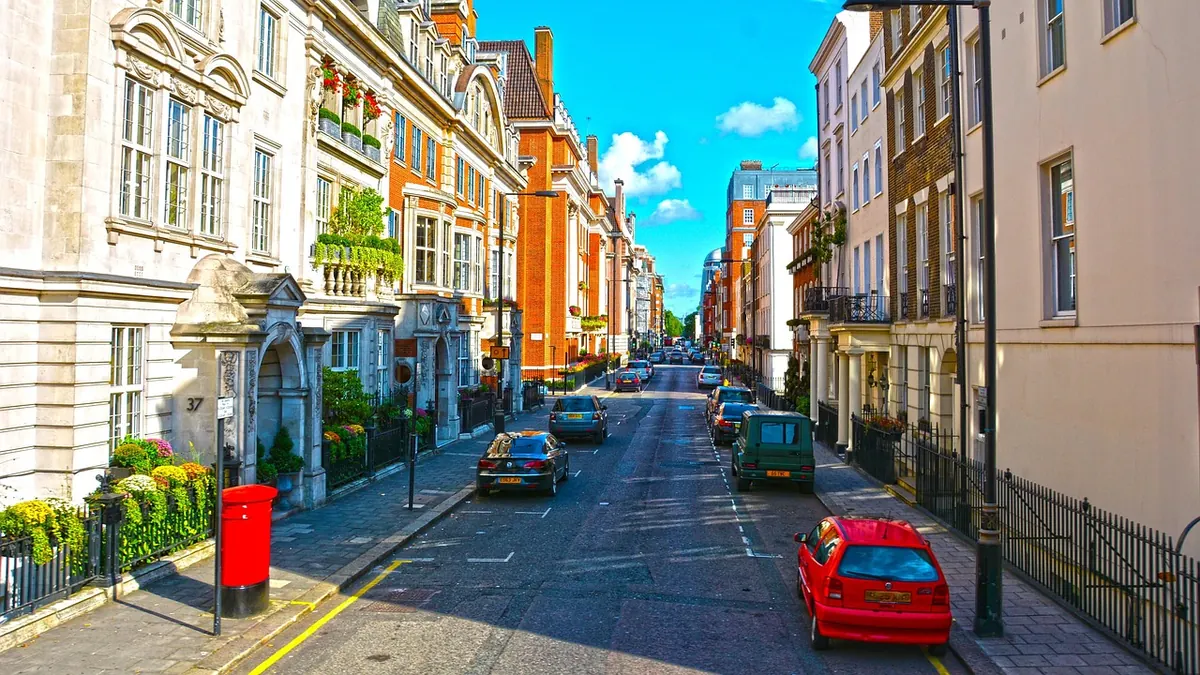
Photo: fviveiros / Pixabay